
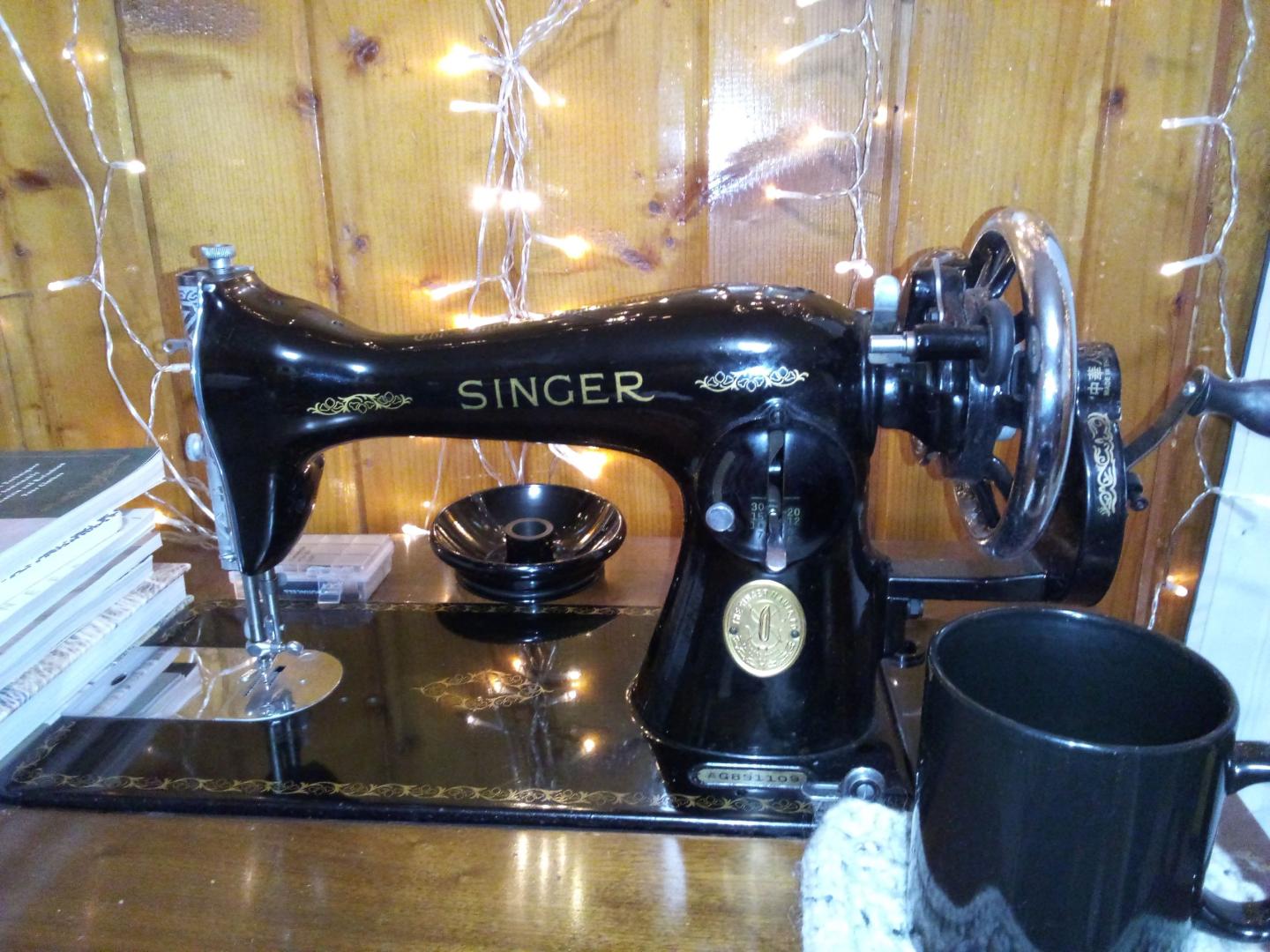
I have a total of four sewing machines. One modern Singer Heavy Duty, a 1950's White 263, a Brother Charger 651 from the same era, and the beauty shown in the picture, which is a 1946 Singer 15-91 I found at a thrift store. All the electrical was shot, so I stripped it down and ordered the hand crank mod kit online. How many of you are into the vintage machines are have one on your wish list?
Lelan
· 1 year ago
Any Vintage Sewing Machine Aficionados Out There?
You must have an account to comment or reply on threads - please log in or join the community.
Sort replies by:
Lelan
· 1 year ago

SewHayleyJane
· 1 year ago
Admin
Oh wow look at that beauty!! Do they all work?
Lelan
· 1 year ago
For the most part, yes. This 15-91 has been fully converted to hand crank operation only, and there is still a bit of teaking to get the modern Chinese-made crank to synch up with the 1946 original clutch plate, but once I get that minor adjustment made, I will be able to say that all my machines work, and that I've done the majority of the work on my vintage machines myself.

Stormy_Point_FiberArts
· 1 year ago
oooooo! Another White machine person! I have a late 1950's White 762 and I simply ADORE it. She is such a tank and sews through almost anything and purrs like a kitten. I also have a 70's Singer (came in a bundle of a storage locker contents purchase) and a modern (albeit 20 yrs old now) Huskystar.
I love your Singer 15-91! and that you converted it to a handcrank, simply awesome! My daughter has a 99K and a Featherweight and she loves them both. So yeah, vintage machine lovers over here ;)
Lelan
· 1 year ago
Since posting this, I have come into over two dozen legitimate antique machines, treadles, hand cranks and some of the first motorized ones. All of the electronics were trashed on the motorized ones, but that just gives me an excuse to generate more hand crank machines to keep them going. I got some interesting brands, too. Household, Minnesota, Standard, White, White Rotary, a few others.

Annette C
· 1 year ago
I have a vintage Elna lotus which is a lovely little machine, it does work but I must admit I rarely use it
Kelly_Mae
· 1 year ago
Community Member
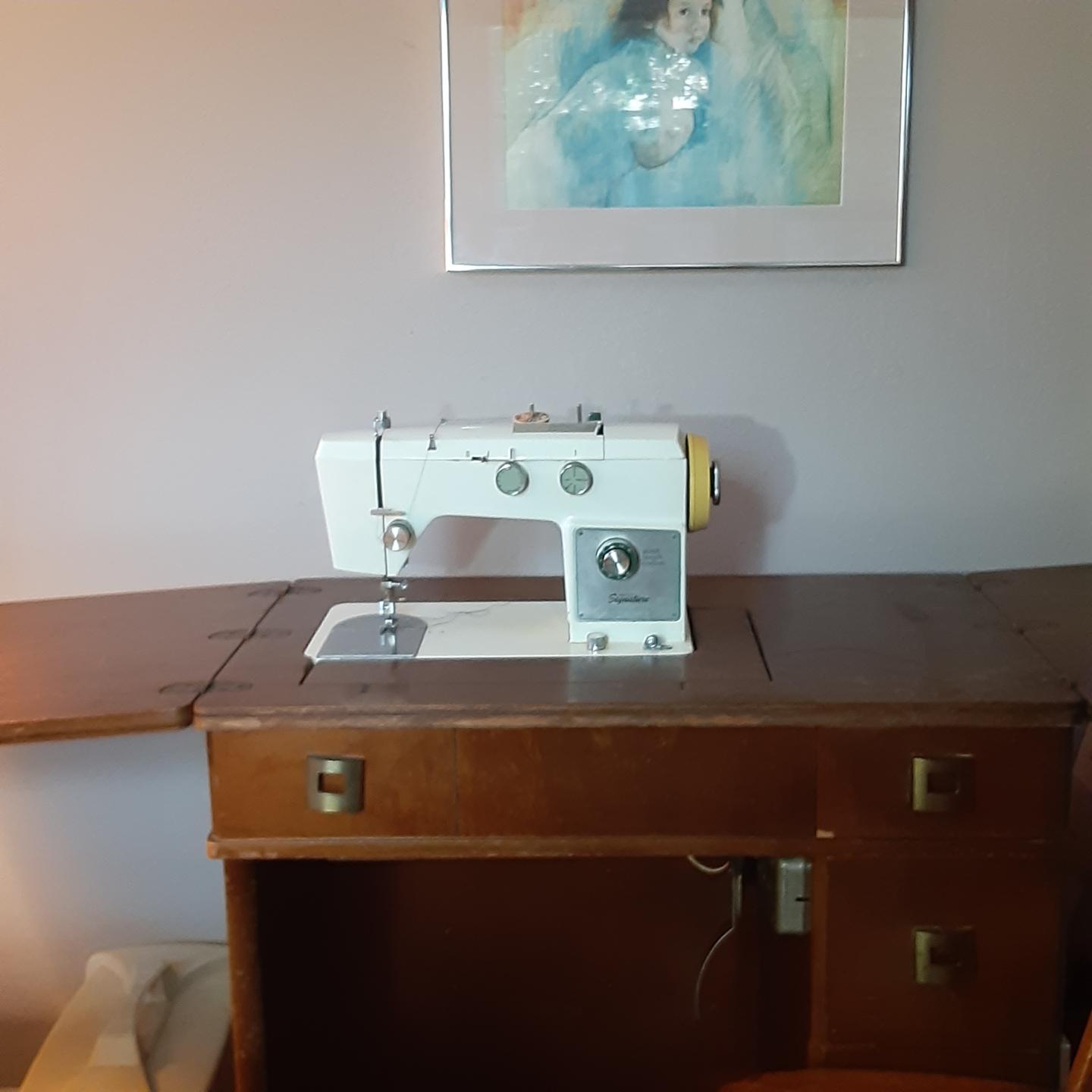
I don't think I'd call myself an aficionado but I appreciate them! I sewed my sisters' bridesmaid dresses on a Singer Featherweight and acquired my grandmother's 1973 Signature, which I use daily.
Lelan
· 1 year ago
Nice family-based history of your craft. Thank you for sharing!
Lelan
· 1 year ago
Update: after paying attention to what I was hearing in brief encounters with people from assorted sewing and sewing-adjacent groups, and I have begun gathering poorly used antique sewing machines on online auction sites in order to get them back into working shape and put back out into the economy. I am sitting at around two dozen machines, most of them circa 1890-1920. LOTS of cool machines!
SewHayleyJane
· 1 year ago
Admin
Ooh that sounds so exciting. What a wonderful skill to have learnt.
Lelan
· 1 year ago
It is, truly. The more I learn about the late Victorian and early Edwardian machines, the more I learn about various aspects of those times. Post WW2 era Japanese models were intentionally patterned after the most popular American models of the previous two decades (like my Bel Air 600, patterned after a Singer 99) and allowed to be produced without patent claims as a part of the reconstruction effort. Single thread chain stitch machines, poularized by the English company Wilcox & Gibbs, were in fashion from the late 1800s to the beginning of the Roaring 20s. Singer began producing it's own version of these, scaled down to be used by children (ardently reminding consumers that it was a genuine machine and not a toy) in 1910 called the model 20. It was intended to be bought for industrious children to learn how to mend and make do and then sent with those children as they grew up and went off to college or whatever other adult paths they might choose. The variations in the Victorian / Edwardian treadle machines are by far the most fascinating for me, though.
SewHayleyJane
· 1 year ago
Admin
Oh wow, that's all so fascinating. I love that they made machines aimed at children, I bet they were still a lot better than the "child friendly" versions we have now.
Lelan
· 1 year ago
They absolutely were. They were built with all of the mechanical parts exposed, mounted externally to a central frame. The original instruction manual included tips on adjusting timing and a presentation on basic mechanics, how to get the most out of the potential uses, and ideas for how young ladies and gents could use these skills to improve their chances of finding/ making/ keeping friends by having something obviously helpful to offer.
Mel
· 1 year ago
Plus Member
A friend gifted me her grandmother's Singer sewing machine (handcrank) I am a scrapbooker so will use this to add stitches to paper
My mums, mum (my nan) long ago (1950's-1960,s) had a Jones' treadle sewing machine which was synonymous with my mum's childhood. I would love to find a Jones' sewing machine. I think that they were only sold in the uk and they were a lot cheaper than Singer at the time.
Lelan
· 1 year ago
In my epic online voyages far and wide, I have come across a few Jones machines here in America. Not sure on price point either then or now, but the models I saw were definitely worthy of their "old black sewing machine" swagger. The two brands that truly take the prize for heavy hitters among collectors these days are the serpentine Wilcox & Gibbs chain stitch machine and a similar machine made by another Somebody & Somebody brand which I could remember until I started typing this sentence. Anyway, the lowest I have seen either of these machines go for online is just under $400 for units that look like they have spent the intervening 130 years since their manufacture at the bottom of someone's fishing pond. Clean, functional units are EASILY $1,000 minimum.
Lelan
· 9 months ago
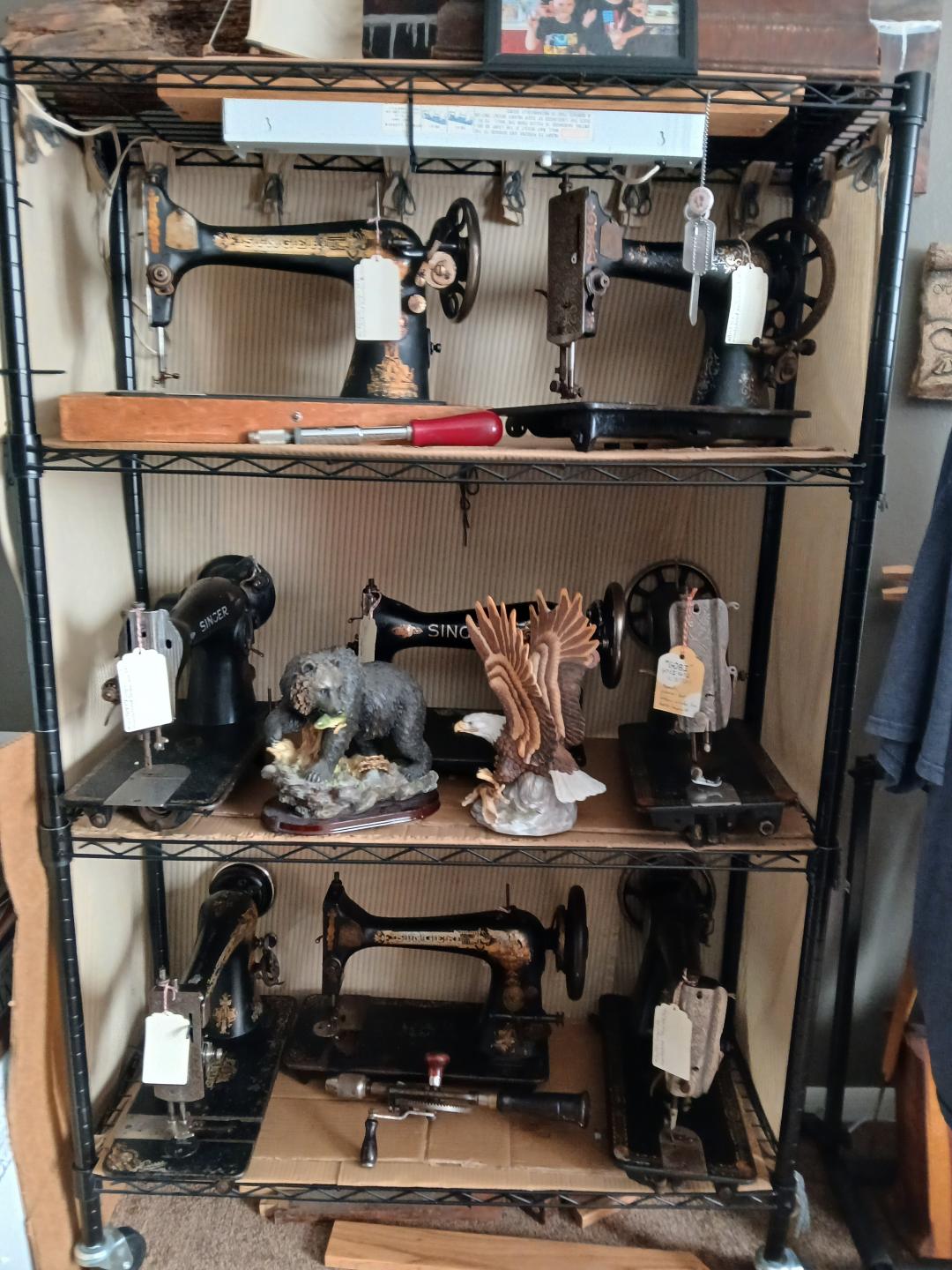
In view my two main display areas for the antique sewing machines I am in the process of working on. The tall set of shelves is what I call my Old Guard: every machine oin that rack is a Singer that is at least 100 years old.

SewHayleyJane
· 9 months ago
Admin
Wow look at them, so beautiful! Have you ever had one that's been past the point of saving?
Lelan
· 9 months ago
Just one. It was a beautiful antique 127 (Singer treadle machine) with a rarer decal set. I bought it online and I didn't see any problems from the photos. When I got it, I noticed the hand wheel was at an odd angle, so I knew it was a bent main drive shaft. When I started trying to disassemble it, some cracks in the main body that I hadn't noticed connected and pieces of the cast iron body fell off and landed in a pile on my workbench. I was most disappointed. But I bought more, so it's okay.
Lelan
· 9 months ago
— Post Deleted —
· 9 months ago
Lelan
· 9 months ago
Well, mechanically, no. These machines are beasts that usually just need to be woken up and unstuck unless there is some sort of major structural damage (like the 127 mentioned in my previous comment). However, since I am more of a conservator than a restorer, the finishes and decals on most of these are in irretrievably bad shape, which is why I get them so cheap. I take them in and immediately start stabilizing the exterior before I do anything else. Cleaning, removing rust, and allowing each to sit in a light protective coat of oil for a couple weeks before I continue with it. I don't do stripping and refinishing; I like to let as much of each machine's history show through my work as possible. I get them working again, but I let them keep their scars and stories. They've earned them.
SewHayleyJane
· 9 months ago
Admin
I love that!! Scars tell a story. We have a TV show here in the UK called The Repair Shop - it's a real cosy watch where people bring in old, special items with their story and then the team set out to repair and/or restore them. It's lovely - it's on the BBC
Lelan
· 9 months ago
Sounds like a great show! If I could, I'd watch just to see the items and here the stories that go with them. I wouldn't even care about the restoration, maybe. Okay, that's a lie. The whole thing sounds cool.

Naomijane
· 1 month ago
(I know I'm 7 months late to this conversation)....the Repair Shop is absolutely lovely, but I had to stop watching it after they "repaired" an antique violin. They pointed out that all the fingerprints on it were from generations of players...and then promptly sanded them all off! I couldn't bear it, seeing it's history being "repaired" away!
Lelan
· 1 month ago
Sounds like you have a good sense of where an antique's worth comes from.

Sarah H
· 9 months ago
Plus Member
I just love sewing machines! Until a few years ago, I was sewing on my Nana’s 1980 New Home machine. I have since bought a Janome 360DC to tick off a couple of features I really wanted my sewing machine to have.
I also own a fully working 1904 Singer 27K, treadle and all — purchased for the grand total of £25.
Just before lockdown, my husband drove all the way to Norfolk to collect a Singer 201K (1950s), a semi-industrial machine, from a wonderful woman called Helen. I’ve bought vintage sewing machine parts and notions from her over the years.
Lelan
· 9 months ago
Not sure about the two more contemporary models you listed, but the Singers are both very nice machines. Thank you for sharing your stories.
Verify Your Email
Before being able to interact with the community you must verify your email account so we know you're a real human being!